Confidence Harbor
Skill: Self-worth
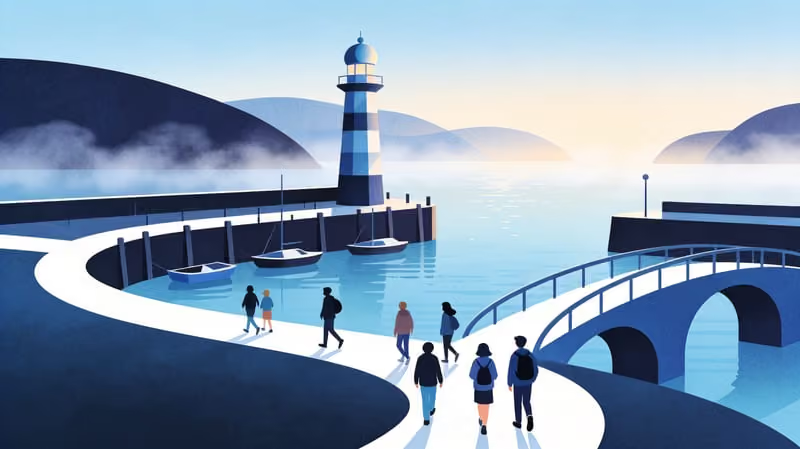
Step into a harbor where every learner has a beacon — a personal strength worth recognizing. Here, confidence is not about being the loudest voice or the fastest hand. It is about knowing what you bring, asking for support when you need it, and separating a setback from your worth.
Practice recognizing your strengths, trying something visible, and coming back from a setback — without anyone scoring who you are.
What learners practice
In Confidence Harbor, learners practice five observable things:
- Identify a personal strength and choose a role that fits it (not the role everyone else picked).
- Ask for support when a setback hits — naming what would help, not pretending nothing happened.
- Separate performance from worth — a missed step is a moment, not a verdict.
- Complete a visible contribution — something others can see, name, and build on.
- Reflect on what went well and what to try next time, in their own words.
Playable now
Signal Lost
World: Confidence Harbor · Time: ~20 minutes · Mode: Single player
A mission signal has gone quiet. Solve five linked clue puzzles by recognizing helpful self-talk, setting boundaries, and spotting the resources around you. No timer by default — take your time. Optional gentle timer for a replay with different choices.
Meet your mentor
Nova
Nova is the learning coach at Confidence Harbor.
Nova is warm, curious, and steady. They notice strengths — not to hand out praise, but to help you see them for yourself. When something goes sideways, they ask one manageable question: What would help right now? They do not loop reassurance, do not judge your worth, and never pretend a game is therapy.
If a scenario ever surfaces real distress, Nova's script points to a trusted adult — because confidence-building is not a substitute for support, and the harbor knows the difference.
Age modes
Confidence Harbor looks and feels different depending on who is playing:
Ages 6–8
A gentle harbor with simpler words, bigger visuals, and one choice at a time.
Ages 9–12
(Playable now.) Full harbor, linked clue puzzles, reading-level toggle included.
Ages 13–17
The same harbor with sharper scenarios, more independence, and less scaffolding.
Adult
A professional harbor — confidence at work, in interviews, in difficult conversations.
Age is not reading level. Reading and support settings adjust independently of age mode. Launch A ships the 9–12 mode with a reading-level toggle; the other three modes arrive in a later phase.
Coming in this world
Confidence Harbor is growing. Here is what is on the way, honestly framed:
- ◆Harbor Builders — a board game where the whole table builds the harbor together, one strength at a time.
- ◆My Compass — a printable workbook for mapping strengths, values, and next steps.
- ◆Facilitator toolkit — ready-to-use discussion guides for educators and families running a session.
These are designed, not vaporware. They arrive as they pass quality review — no dates promised until they are ready.
Cross-world connection
Confidence Harbor is part of a connected universe. A decision you make here can echo somewhere else.
Echo card
In the full version (coming with the member portal), your choices carry forward between worlds. A budgeting decision can test your accountability. A leadership conflict can require empathy. A persuasive offer can demand critical thinking and self-worth at once.
For educators and families
After a Confidence Harbor game, adults get a follow-up discussion guide — three or four open questions, no prep required:
- What strength did the learner notice in themselves?
- When did they ask for support, and what happened?
- What is one word they would use to describe their contribution?
- What might they try differently next time?
These guides are printable, one page, and built for a 5-minute conversation — at the kitchen table or in the last minutes of class.
Download the Confidence Harbor discussion guide → (discussion guides are available through support while the guide library is prepared)
Your next move
Play Signal Lost — no account, ~10 minutes. Explore Responsibility Ridge — the next world.